
How to Stop Ants and Keep Them Out for Good
- Dave Jackson
- 3 days ago
- 5 min read

A line of ants crossing the kitchen counter can feel like a small problem until it keeps coming back. Knowing how to stop ants means addressing more than the ones you can see. The ants in your home are usually scouts and workers traveling between a food source and a larger colony nearby.
Wiping up the trail may provide a brief break, but it rarely solves the cause. Lasting ant control comes from removing what attracts them, blocking the paths they use, and treating the colony when cleanup alone is not enough.
Why Ants Keep Coming Back
Ants are persistent because they are organized. A worker finds water, crumbs, grease, pet food, sugary residue, or an easy entry point, then leaves a scent trail that guides other ants to the same place. That is why a few ants can turn into a steady stream overnight.
In the Springfield, Missouri area, ants often become more noticeable during warm, wet weather, after heavy rain, or when dry conditions push them indoors looking for moisture. Kitchens, bathrooms, laundry rooms, basements, utility areas, and spaces around pet bowls are common activity zones.
The visible trail does not always lead to a nest inside the house. Colonies may be in mulch, landscaping, wall voids, under slabs, around foundations, or near moisture-damaged wood. Some ant species can establish satellite colonies, which makes repeated do-it-yourself spraying less effective than it first appears.
How to Stop Ants at the Source
Start with sanitation, but be realistic about what it can and cannot do. A clean kitchen helps remove the reward that brought ants indoors. It does not automatically eliminate an established colony.
Wipe counters, stovetops, cabinet shelves, and floors with a household cleaner, paying attention to sticky spills and grease near appliances. Empty indoor trash regularly, rinse recyclable containers, and store pantry items in sealed containers. Pet food should not sit out all day if ants are actively feeding around it, and water spills near bowls should be dried promptly.
Once you have cleaned the area, erase the trail. Soap and water can help remove the scent markers ants use to guide one another. Clean along the route, not only where the ants are currently gathered. Check the edges of counters, backsplashes, baseboards, window sills, and the floor beneath appliances.
Moisture control matters just as much as food control. Repair drips under sinks, address sweating pipes, and make sure bathroom and kitchen ventilation is working properly. If ants are appearing in a basement or crawl space, look for plumbing leaks, poor drainage, or damp materials that may be creating a favorable environment.
Seal the Routes They Use
After reducing food and moisture, look for entry points. Ants can fit through very small gaps, especially around windows, doors, utility lines, pipes, and cracks in the foundation. Caulk narrow openings where appropriate, replace worn weatherstripping, and repair damaged screens.
Outside, keep mulch, leaf litter, firewood, and dense vegetation from pressing directly against the home. Trim branches and shrubs away from exterior walls and rooflines. These changes do not create an instant ant-free property, but they reduce the protected pathways ants use to reach your home.
Do not overlook the garage. Stored pet food, beverage cans, cardboard, and damp corners can attract ants, then give them easy access to the living space. A quick inspection around the garage door and utility penetrations often reveals gaps that deserve attention.
Baits Usually Work Better Than Sprays
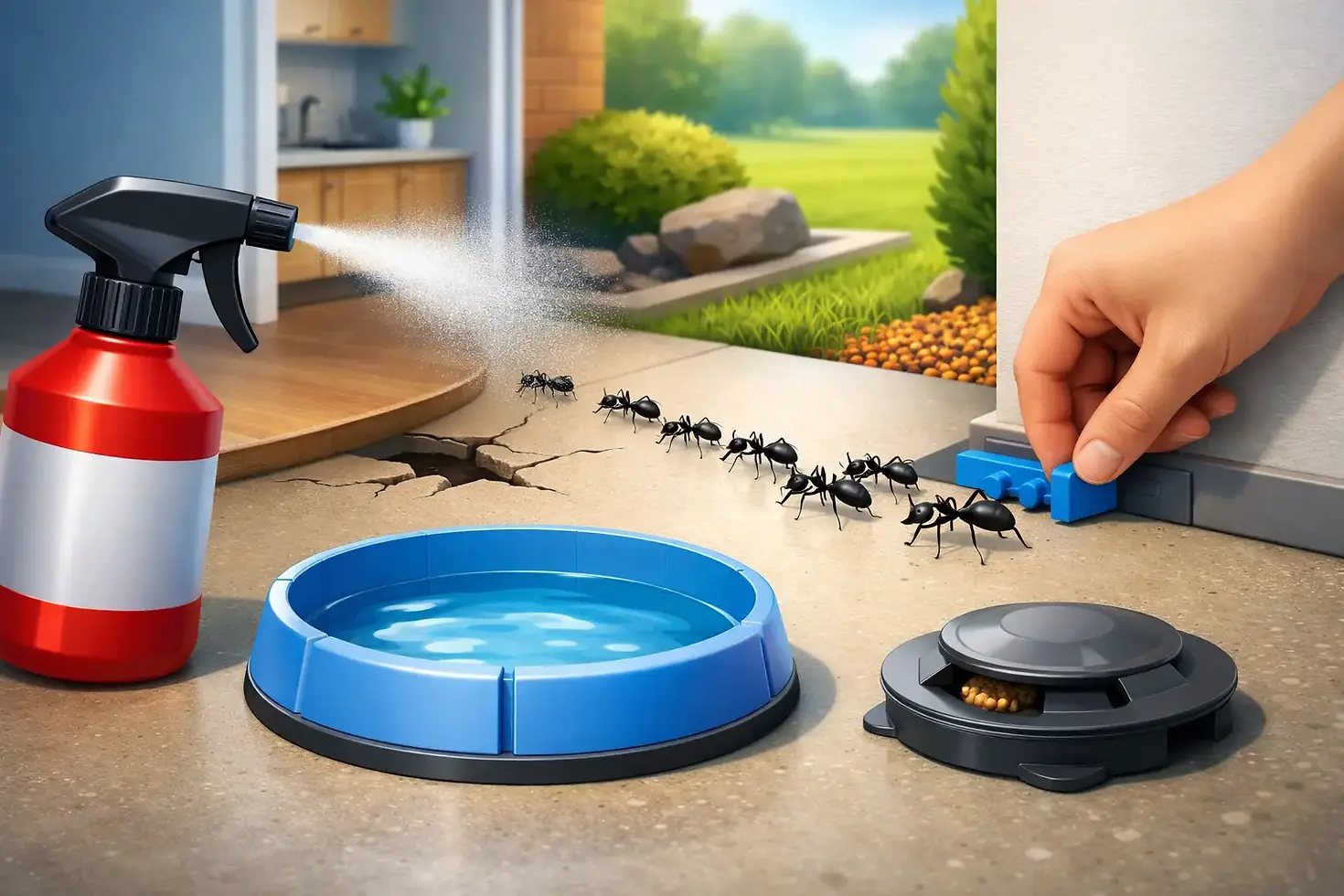
When ants are actively trailing indoors, many people reach for a contact spray. Sprays can kill the ants you see, but they may not reach the colony. In some situations, disturbing a colony with repeated repellent sprays can cause it to split or shift activity to a new location.
Ant bait works differently. Worker ants carry it back to the colony and share it with other ants, including the queen. That makes baiting one of the more useful approaches for controlling common household ants, provided it is placed correctly and given time to work.
Use a bait labeled for ants and follow every label direction. Place it near active trails, while keeping it inaccessible to children and pets. Avoid spraying insecticide directly around a bait placement, since repellent products can discourage ants from feeding on it.
It is normal to see increased ant activity around a newly placed bait for a short time. That can mean the workers are feeding and carrying it back. Do not remove the bait simply because more ants appear at first. Instead, monitor it and replace it only as directed by the product label.
The type of bait matters. Some ants prefer sweets, while others are more interested in protein or grease. If one bait is ignored, it may be the wrong food preference for that species or the colony may have another food source available. That is one reason ant control can depend on the situation rather than a one-product answer.
Avoid the Common Mistakes That Prolong Ant Problems
A few quick fixes can make an ant problem harder to control. The biggest issue is treating only the trail while leaving the colony, moisture source, or entry point untouched.
Avoid these common missteps:
Spraying every visible ant without using a colony-focused treatment strategy.
Leaving crumbs, open food, overflowing trash, or pet food accessible overnight.
Placing bait and repellent spray in the same area.
Sealing an opening before checking whether ants have alternative paths inside the structure.
Ignoring water leaks, damp wood, clogged gutters, or poor drainage near the foundation.
Ants may also move when their food source changes. If they disappear from one counter and appear in another room, that does not necessarily mean the problem is gone. It may mean the colony is using a different route.
When an Ant Problem Needs Professional Help
Professional treatment is a smart next step when ants return after baiting and cleanup, appear in several rooms, emerge from wall voids, or show up in large numbers day after day. A licensed technician can identify likely nesting areas, choose treatment methods that fit the species and property conditions, and help prevent repeat activity.
It is especially worth scheduling an inspection when you see large black ants, winged ants indoors, activity around damaged or damp wood, or ants near electrical fixtures and wall openings. Carpenter ants do not eat wood like termites, but they can excavate softened or moisture-damaged wood for nesting. Their presence can point to a moisture issue that needs attention.
Winged ants can also be confused with termites. The difference matters because termite activity requires a very different response. If you are unsure what you are seeing, saving a sample or taking a clear photo can help with identification during an inspection.
For apartments, rental homes, and commercial properties, ant control may involve shared walls, exterior landscaping, dumpsters, kitchens, break rooms, or storage areas. Property-wide coordination is often more effective than treating one unit or one room in isolation.
Keep Ants From Returning
The best long-term plan is routine prevention. Keep food sealed, clean up spills promptly, reduce standing water, and inspect exterior gaps a few times a year. After major rain, take a look around the foundation, gutters, and low spots where water may be collecting.
For homes and businesses with recurring activity, ongoing pest control can provide a more dependable layer of protection. GorillaGuard Pest Control can inspect the property, explain what is drawing ants in, and provide practical treatment options without making the process confusing.
You do not have to wait until ants take over the kitchen or disrupt your business. Addressing the first trail, checking for moisture, and getting help when activity persists can protect the comfort of your space before a small nuisance becomes a larger problem.


Comments