
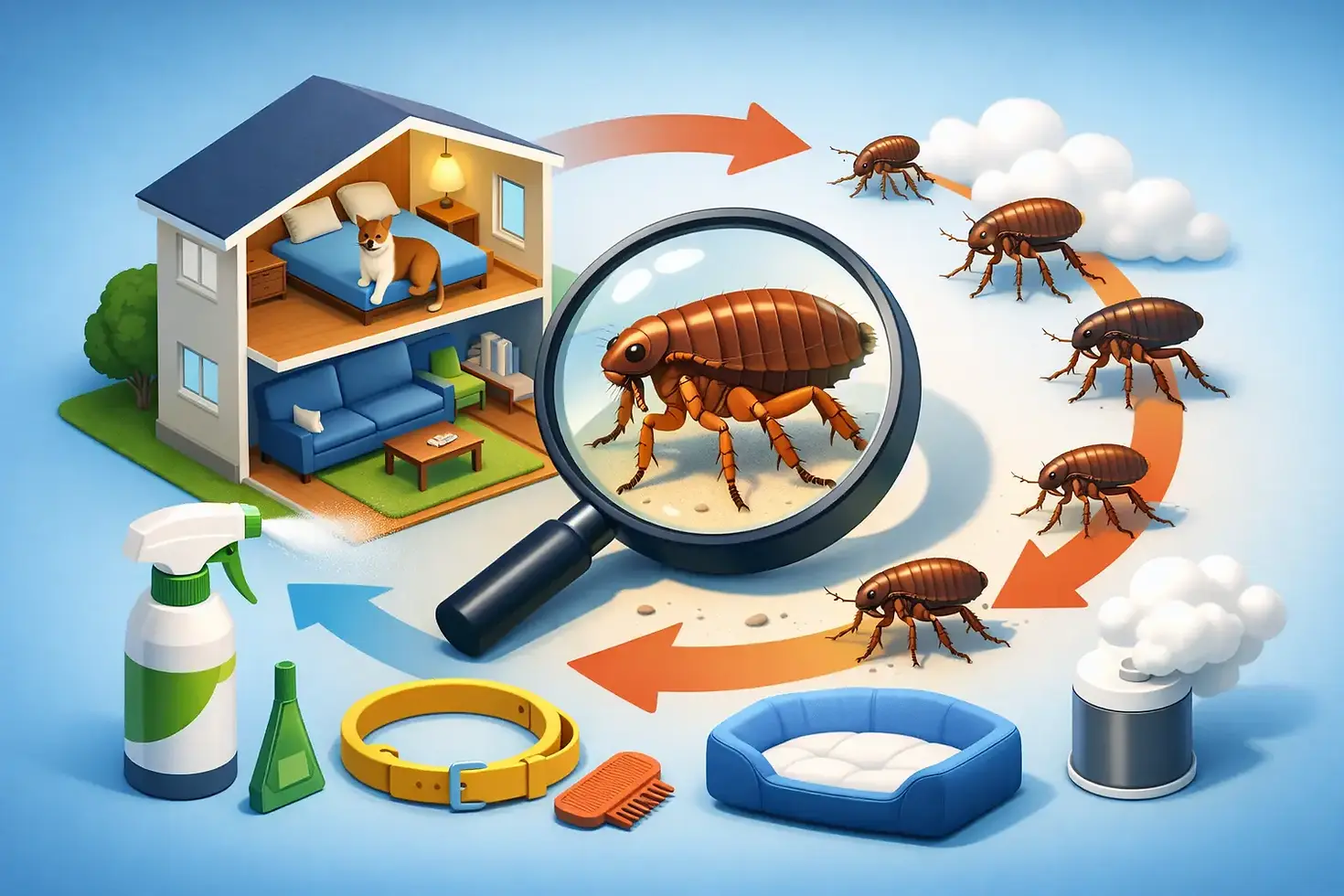
Flea Treatment for House: Stop the Cycle
- Dave Jackson
- Jul 16
- 5 min read

A few fleas on a pet can become a house-wide problem faster than most people expect. Adult fleas you can see are only part of the infestation. Eggs, larvae, and pupae may be tucked into carpet fibers, pet bedding, cracks along baseboards, upholstered furniture, and other protected areas. Effective flea treatment for house means addressing all of those stages, not simply killing the fleas that jump today.
For Springfield-area homes and businesses, the fastest path to relief is a coordinated plan: treat the animal host, clean the environment thoroughly, and use targeted pest control when the problem has moved beyond a few isolated fleas.
Why Fleas Keep Coming Back
Fleas reproduce in stages. Adults feed on a host and lay eggs, which fall into the environment. Those eggs hatch into larvae, larvae develop into pupae, and pupae later emerge as adults when they sense movement, heat, or carbon dioxide nearby.
That timeline explains a frustrating experience many property owners have: they spray once, see fewer fleas, then notice new activity days or weeks later. The first treatment may have killed exposed adults, while protected pupae remained untouched. Once they emerge, the cycle starts again unless the home and pets are being managed at the same time.
A flea issue does not mean a home is dirty. Pets can pick up fleas outdoors, wildlife can introduce them around the property, and fleas can hitchhike indoors on clothing or belongings. Still, regular cleaning removes eggs and larvae from the places where they are most likely to develop.
Flea Treatment for House Starts With Every Pet
If a dog or cat lives in the home, flea control must begin with the pet. Treating rooms while leaving an untreated host available gives adult fleas a place to feed and reproduce.
Talk with your veterinarian about a flea-control product appropriate for each pet's species, age, weight, health, and lifestyle. Do not use a dog product on a cat or assume a product that worked years ago is still the right choice. Follow the label and your veterinarian's directions exactly.
All pets in the household generally need to be considered, even if only one is scratching. Fleas often move to the easiest available host. If a pet has skin irritation, hair loss, signs of infection, or unusual behavior, veterinary care should come before home remedies.
Clean the Places Fleas Actually Live
Environmental cleanup is not optional. It reduces the number of developing fleas and makes any professional or over-the-counter treatment more effective.
Vacuum carefully and often
Vacuum rugs, carpets, upholstered furniture, pet resting areas, under furniture, along baseboards, and cracks where dust collects. Pay extra attention to the areas where pets sleep or spend time. A single quick pass through the center of the room is not enough.
Empty the vacuum canister into a sealed bag and take it outside promptly, or dispose of the vacuum bag after use. During an active infestation, vacuuming every day or every other day for a period of time can help remove eggs, larvae, flea dirt, and newly emerging adults.
Wash fabric items on a hot setting
Wash pet beds, blankets, throws, removable furniture covers, and any washable bedding that pets use. Use the warmest water and dryer settings the fabric care label allows. Keep pet bedding clean throughout the treatment period, not just once at the beginning.
Give special attention to hidden areas
Fleas prefer protected, low-traffic spots. Check under beds, behind furniture, inside closets where pets rest, and around pet carriers. If pets ride in the car, clean vehicle upholstery and floor mats too. An untreated car can reintroduce fleas after the house starts improving.
Be Careful With Store-Bought Flea Products
Foggers, bombs, and broad indoor sprays can be tempting when fleas are biting. They are rarely the best first answer. Foggers may not reach beneath furniture, deep into carpet, or inside the protected locations where immature fleas develop. They can also create unnecessary exposure if used incorrectly.
If you choose an over-the-counter product, use only one labeled for indoor flea control and read the entire label before applying it. The label tells you where the product may be used, how long people and pets must stay out of the area, and whether food items, aquariums, or pet supplies need special protection.
Never combine products just because the fleas are persistent. Mixing treatments or applying more than the label allows can create a safety problem without improving results. Essential oils and homemade mixtures also deserve caution, particularly around cats, birds, fish, children, and people with respiratory sensitivities.
A professional treatment can be a better value when activity is widespread, when bites continue after careful cleaning, or when you do not want to guess at product selection and application. Licensed technicians can inspect the property, identify likely flea harborages, and build a treatment plan around the infestation and the people and animals in the space.
What to Expect After Professional Flea Service
A good flea plan sets realistic expectations. You may still see adult fleas after an initial treatment because pupae can remain protected until they emerge. This does not automatically mean the treatment failed.
Your technician may recommend continued vacuuming, laundering pet bedding, and maintaining veterinarian-approved pet treatment between visits. In many cases, follow-up service is part of controlling the full life cycle. The right timing depends on the level of activity, the home layout, pets, and how long fleas have been established.
Before treatment, ask clear questions about preparation, reentry times, pet handling, and what results to expect. Pest control should not feel mysterious. You deserve straightforward instructions and a chance to discuss concerns about children, pets, allergies, or sensitive areas of the property.
When Fleas May Be Coming From Outside
Indoor treatment can fall short when the source is outdoors. Dogs and cats may pick up fleas in shaded areas with leaf litter, tall grass, pet resting spots, crawlspace openings, or locations visited by wildlife. Raccoons, stray animals, squirrels, and other wildlife can contribute to flea pressure around a structure.
Keep grass trimmed, remove heavy yard debris, and limit access beneath decks or porches when possible. Focus on areas where pets rest rather than treating an entire lawn without a reason. Fleas need favorable conditions and a host, so a broad yard application is not always necessary.
For rental properties and commercial spaces, communication matters just as much. Property managers should document reported activity, inspect common areas and pet-accessible spaces, and coordinate treatment with occupants. A partial response in one unit or office can allow flea activity to continue elsewhere.
Signs It Is Time to Call a Professional
Call for an inspection when fleas are appearing in multiple rooms, bites continue despite pet treatment and cleaning, or the property has carpeting and furniture that make the infestation difficult to reach. Professional help is also wise when the source may involve wildlife, a vacant unit, a crawlspace, or a previous tenant's pets.
GorillaGuard Pest Control provides clear, local support for flea problems throughout the Springfield, Missouri metro area. A free inspection or quote can help you understand whether you are dealing with a minor issue or an established infestation that needs a more complete response.
The goal is not to chase every flea you see. It is to break the cycle long enough for the home, pets, and surrounding conditions to stop supporting the next generation. With consistent cleaning, proper pet care, and professional treatment when needed, your space can feel comfortable again.


Comments